Damen Shipyards put electric water buses on the Copenhagen harbour. Zero-emission public transport in one of Europe's busiest urban waterways. The ambition was double-edged: keep tight schedules that passengers can rely on, while getting the most out of every battery charge. On the water those two goals constantly pull at each other. Sail faster and you burn energy; sail economically and the timetable starts to slip. Skippers were making that trade-off on gut feeling, dozens of times a day.
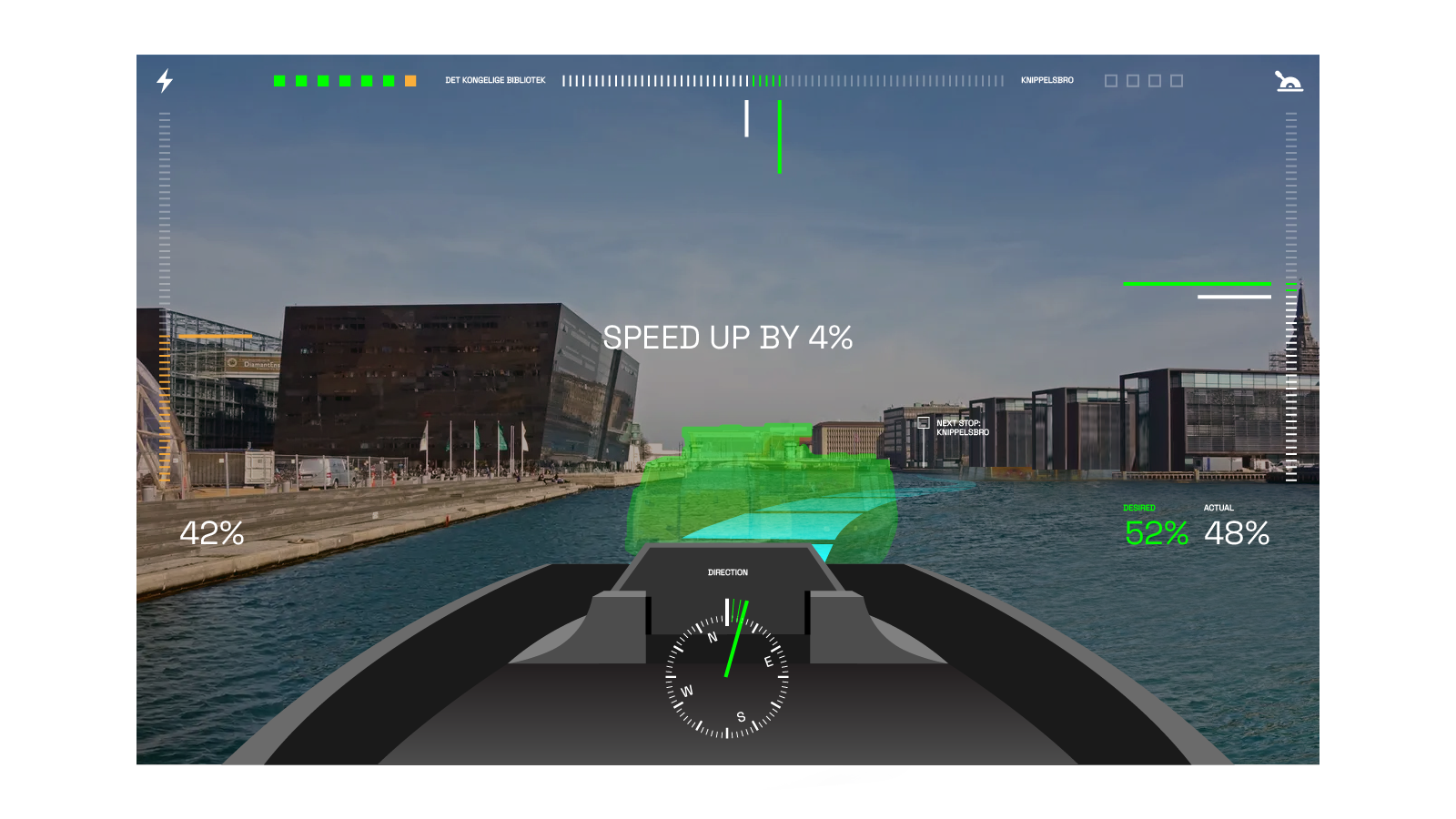
We built an AI route-optimisation model on top of the vessels' own sensor data, continuously computing the best speed and path to save energy without causing delays. Just as important as the model was the way it lands on the bridge: a clear 3D visualisation with a 'ghost ship': a reference vessel sailing the ideal line, so skippers see energy use, time trade-offs and schedule impact at a glance. No tables, no alarms; one image that answers the question that matters: am I on the right line?
Less wasted energy, longer range per charge, and zero-emission operations that hold their schedule in demanding urban waters. The trade-off between punctuality and battery life didn't disappear. It became visible, and therefore manageable. Skippers keep the wheel; the model keeps the score.